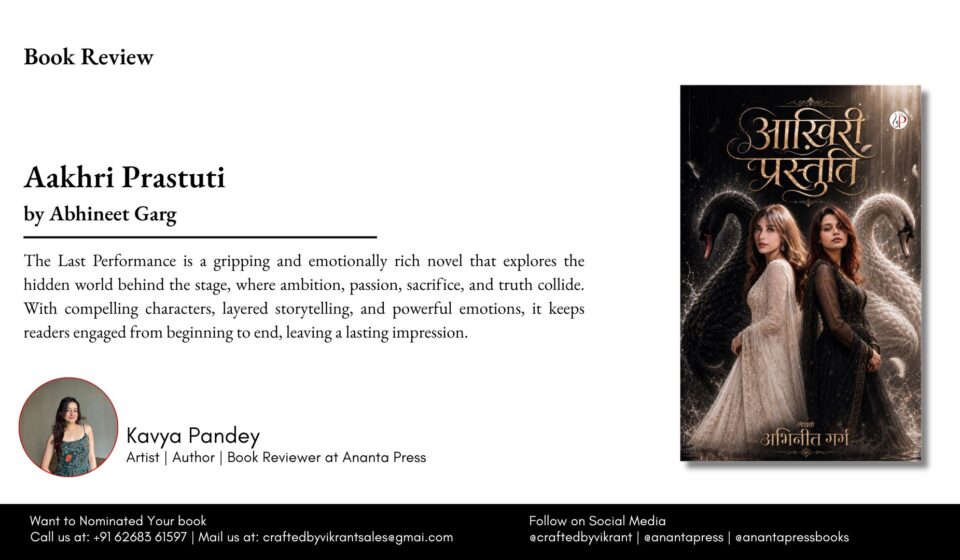

Aakhri Prastuti is an emotionally immersive and psychologically layered novel that explores the dazzling yet unforgiving world of theatre and cinema through a narrative that is as captivating as it is thought-provoking. From its very first pages, the novel establishes a compelling atmosphere where glamour and darkness coexist, inviting readers into a world where every applause conceals an untold sacrifice and every successful performance carries the weight of personal pain. Rather than presenting the entertainment industry merely as a backdrop, the author transforms it into a living, breathing character that influences every decision, relationship, and emotional conflict within the story.
One of the novel’s greatest strengths lies in its storytelling technique. The narrative begins with a high-profile television interview featuring celebrated actress Alisha Khanna, whose recollections gradually transport readers into a deeply emotional past. This layered narrative structure creates an engaging bridge between present and memory, allowing the story to unfold with cinematic elegance. The transition between contemporary events and theatrical history is smooth and immersive, maintaining a sense of curiosity while steadily revealing the emotional foundation of the characters. The pacing is deliberate yet gripping, ensuring that every revelation feels earned rather than forced.
The world-building deserves particular appreciation. The author paints vivid pictures of television studios, theatre halls, rehearsal rooms, backstage corridors, and performance stages with remarkable visual clarity. Every setting is described with such detail that readers can almost hear the echoes of applause, smell the wooden stage floors, and feel the nervous anticipation of performers waiting behind the curtains. This visual richness transforms the reading experience into something almost cinematic, making it easy to imagine the scenes unfolding on a large screen. The descriptions never feel excessive because they contribute directly to the emotional atmosphere of the narrative.
The characters introduced in the novel are carefully crafted with emotional complexity. Alisha Khanna emerges as much more than a successful actress; she becomes the emotional bridge connecting past and present while representing the cost of artistic excellence. Her reflections possess maturity, vulnerability, and quiet strength. Even more fascinating is Ananya Pandit, whose passion for theatre and relentless pursuit of perfection establish her as the emotional core of the story. She embodies the dreams, insecurities, and resilience shared by countless aspiring artists who dedicate themselves completely to their craft. Rather than portraying her as a flawless heroine, the author allows readers to witness her fears, determination, and emotional struggles, making her journey deeply relatable and profoundly human.
Another memorable aspect of the novel is its exploration of performance as both an artistic expression and a psychological experience. Theatre is not presented merely as entertainment but as an emotional battlefield where artists confront their deepest fears, ambitions, and vulnerabilities. Every rehearsal, every dialogue, and every performance carries symbolic meaning, reminding readers that great art often demands emotional exposure. The novel repeatedly suggests that the finest performances emerge not from technical perfection alone but from genuine emotional truth, an idea that resonates throughout the narrative.
The embedded theatrical production, Hanson Ki Jheel, functions as a remarkable story within the story. Drawing inspiration from the timeless themes of love, sacrifice, deception, destiny, and transformation, this fictional stage performance mirrors the emotional conflicts experienced by the novel’s central characters. Rather than interrupting the narrative, the play enriches it by creating symbolic parallels between fiction and reality. This literary device demonstrates the author’s thoughtful structural planning and significantly enhances the depth of the storytelling.
The emotional intensity of the novel becomes particularly powerful through its portrayal of artistic ambition and the hidden struggles that often remain invisible to audiences. The manuscript does not romanticise success; instead, it reveals the loneliness, self-doubt, competition, and emotional exhaustion that frequently accompany creative excellence. By exploring these realities, the novel moves beyond conventional entertainment fiction and enters the territory of psychological drama. The characters are constantly challenged not only by external circumstances but also by their own internal conflicts, making their emotional journeys authentic and compelling.
Among the strongest thematic elements is the novel’s examination of power, vulnerability, and personal dignity. Without becoming preachy or sensational, the narrative raises meaningful questions about exploitation, trust, professional ambition, and the difficult choices artists are sometimes forced to confront. These moments introduce emotional gravity while encouraging readers to reflect upon broader social realities within creative industries. The author approaches these sensitive subjects with seriousness, allowing the emotional consequences to speak louder than dramatic exaggeration.
The writing style itself is elegant, descriptive, and emotionally expressive. The language frequently employs visual imagery, poetic metaphors, and symbolic descriptions that enrich the reading experience without slowing the narrative. Emotional moments are handled with restraint rather than melodrama, enabling readers to connect naturally with the characters’ experiences. The dialogue feels believable and often reveals deeper psychological layers beneath seemingly ordinary conversations. This balance between descriptive narration and realistic interaction gives the novel a distinctly literary quality while remaining accessible to general readers.
The novel also succeeds in maintaining suspense through carefully controlled revelations. Instead of relying on constant plot twists, the author gradually uncovers hidden truths, allowing curiosity to build chapter after chapter. This measured narrative rhythm keeps readers emotionally invested while encouraging them to continue discovering the mysteries surrounding the central characters. The unfolding of the story feels organic, reflecting thoughtful planning rather than artificial suspense.
Perhaps the most admirable achievement of Aakhri Prastuti is its celebration of artists themselves. It honours performers not merely for their public achievements but for the invisible emotional labour that makes every unforgettable performance possible. The novel recognises that behind every standing ovation exists relentless discipline, repeated failure, personal sacrifice, and unwavering dedication. This respect for the artistic process gives the story remarkable emotional sincerity and distinguishes it from many contemporary works centred on the entertainment industry.
Overall, the available portion of Aakhri Prastuti presents a sophisticated blend of psychological drama, theatrical artistry, emotional realism, and literary storytelling. Its compelling characters, immersive atmosphere, symbolic structure, and emotionally resonant themes create a reading experience that feels both intellectually engaging and emotionally rewarding. Rather than merely telling the story of performers, the novel invites readers to understand the invisible human struggles hidden behind every successful performance. It is a work that celebrates art while honestly acknowledging the personal cost often required to create it. For readers who appreciate character-driven narratives, emotionally layered storytelling, and novels that explore the intersection of ambition, creativity, and humanity, Aakhri Prastuti promises to be a memorable and meaningful literary experience.