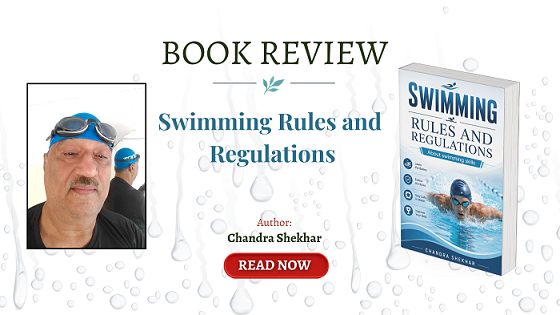

Swimming Rules and Regulations by Chandra Shekhar is a practical and useful book for anyone who wants to understand competitive swimming in a clear and organized way. Swimming is not only about moving quickly through the water. Competitive swimming also has many rules, technical details, officials, timing procedures, and regulations that swimmers need to understand. This book brings these important areas together in one place.
One of the strongest points of the book is that it focuses on both the rules of competition and the practical side of swimming. It explains how swimming competitions are managed and what different officials are responsible for. For a swimmer or parent who is new to competitive swimming, these rules can sometimes be confusing. This book helps make them easier to understand.
The book covers important parts of swimming competitions, including the seeding of heats, starts, race rules, timing, world records, and automatic officiating procedures. These may seem like small details to someone watching a swimming competition, but they are very important during an actual race. Knowing these rules can help swimmers understand what happens during a competition and why officials make certain decisions.
Another useful part of the book is its coverage of age-group rules and open-water swimming regulations. Different swimming events can have different requirements, and swimmers need to know the rules that apply to their particular competition. Having this information in one practical handbook can make it easier for swimmers and parents to prepare themselves.
The book also gives attention to the four major swimming strokes: Freestyle, Backstroke, Breaststroke, and Butterfly. It does not simply name these strokes but looks at their technical aspects. It discusses body position, arm action, leg action, breathing, timing, starts, and turns. These are important parts of swimming technique, and understanding them can help a swimmer think more carefully about performance.
The sections on relay techniques are also useful because relay events require swimmers to work with others while following specific technical requirements. The book also includes information about survival swimming and competition strokes, giving it a broader purpose beyond simply explaining race rules.
What makes this book valuable is its practical nature. It is not only focused on swimmers who already know everything about competitive swimming. It also aims to help people who may be unfamiliar with competition regulations. This makes the book particularly useful for parents who are supporting young swimmers.
A parent may understand that their child enjoys swimming but may not understand how heats, starts, timing, officials, or race regulations work. Reading this book can help create a better understanding of what happens at swimming competitions. It can also make it easier for parents to follow their child’s progress and understand the competitive side of the sport.
The book can also be useful for coaches and officials. Coaches need to understand competition rules while teaching swimmers, and officials need to understand their responsibilities properly. The information collected in this book can therefore be useful to different people involved in swimming.
Overall, Swimming Rules and Regulations is a focused handbook that brings together competition rules and swimming techniques. Its biggest strength is that it connects the technical side of swimming with the rules that govern competitive events. It reminds readers that good swimming is not only about speed and physical ability. Understanding the rules and performing the strokes correctly are also important parts of competitive swimming.
The language and purpose of the book make it suitable for people who want practical knowledge rather than general information about swimming. It can be used as a reference when learning about competitions, rules, techniques, and different swimming events.
The book also reflects the author’s purpose of helping swimmers understand swimming rules correctly and improve their technical skills. This makes it more than a simple collection of regulations. It is intended to support better understanding and contribute to the development of swimming performance.
Why You Need to Read This Book
If you are a swimmer, coach, parent, official, or someone who is seriously interested in competitive swimming, Swimming Rules and Regulations can be a useful book to have. It brings together many areas that are important in swimming but are not always easy to understand for beginners.
For swimmers, the book can help explain competition rules and the technical details of the four major strokes. Understanding starts, turns, breathing, body position, arm and leg movements, timing, and relay techniques can help swimmers become more aware of how they perform in the water.
For parents, the book can make competitive swimming easier to understand. Instead of watching a competition without knowing the rules, parents can learn about heats, officials, timing, age-group regulations, and other important parts of swimming competitions.
For coaches, the book provides useful information about both technical skills and competition regulations. For officials, it offers information related to their responsibilities and the management of competitions.
The book is also worth reading because it covers both pool competitions and open-water swimming regulations. It gives readers a wider understanding of swimming rather than focusing on only one type of event.
Most importantly, the book encourages a better understanding of the sport. Knowing the rules can help swimmers compete with greater awareness, while understanding technique can help them work on their swimming skills.
Swimming Rules and Regulations is therefore a practical reference for anyone who wants to understand competitive swimming more deeply. It brings rules, competition procedures, technical skills, and swimming regulations together in one book. For people who want to learn the sport properly and understand what happens behind a swimming competition, this book can be a valuable addition to their reading.
Amazon Link: https://www.amazon.in/Swimming-Rules-Regulations-Chandra-Shekhar/dp/9379000472/