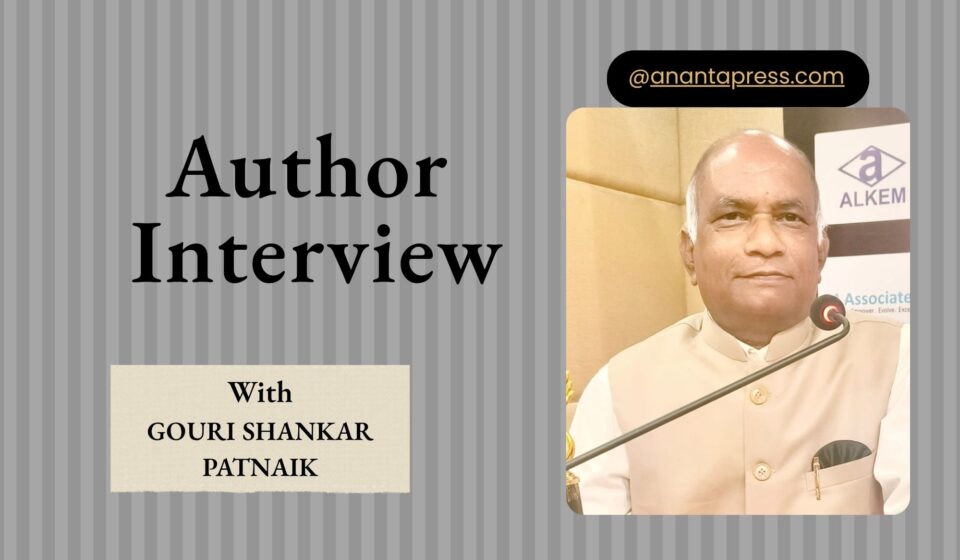

- What inspired you to write ESG Beyond Compliance, and how did your four decades in quality management and industry shape its message?
ESG Beyond Compliance was inspired by my conviction that sustainability should be a business philosophy, not merely a reporting or regulatory exercise. Throughout my four decades in quality management, technical services, business excellence, and manufacturing, I witnessed that the most successful organizations were those that balanced profitability with responsibility, creating value for customers, employees, communities, and the environment.
I found that organizations often treated ESG as a compliance requirement, while the real opportunity lay in making it a driver of innovation, resilience, trust, and long-term competitiveness.
The book reflects lessons learned from leading quality initiatives, promoting operational excellence, and supporting organizational transformation across industries. Its central message is that compliance is only the beginning. True success comes when environmental stewardship, social responsibility, and ethical governance become embedded in an organization’s culture, strategy, and decision-making processes.
Through ESG Beyond Compliance, I wanted to provide a practical roadmap for leaders to move beyond obligations and embrace ESG as a pathway to sustainable growth, stakeholder trust, and enduring business excellence. - You describe ESG as a management philosophy. What must change for an organization to move from compliance to genuine commitment?
To move from ESG compliance to genuine commitment, organizations must shift their mindset from “meeting requirements” to “creating value.” Compliance is about satisfying regulations and reporting obligations; commitment is about embedding ESG into strategy, culture, and everyday decision-making.
This transformation begins with leadership. ESG must be championed by top management and integrated into business objectives, performance metrics, investment decisions, and risk management processes. Employees at all levels should understand that sustainability, social responsibility, and ethical governance are not separate initiatives but integral to how the organization operates.
Equally important is stakeholder engagement. Organizations should actively listen to customers, employees, investors, suppliers, and communities, using their expectations to shape priorities and drive continuous improvement.
My experience in quality management has shown that lasting success comes when ESG is treated much like quality itself, not as a department or a compliance exercise, but as a culture. When ESG becomes part of organizational DNA, it drives innovation, strengthens trust, enhances resilience, and creates sustainable long-term value for all stakeholders. - Your book connects profit with purpose. How should leaders approach decisions where sustainability brings immediate costs but long-term benefits?
Leaders must view sustainability investments not as costs, but as strategic investments in future resilience, competitiveness, and stakeholder trust. The key is to balance short-term financial pressures with long-term value creation.
When faced with decisions where sustainability requires immediate expenditure, leaders should evaluate the total lifecycle benefits, including risk reduction, operational efficiency, regulatory preparedness, brand reputation, customer loyalty, and access to new markets. Many initiatives that appear costly today often generate significant returns through energy savings, waste reduction, improved resource efficiency, and enhanced stakeholder confidence.
The most successful organizations integrate profit and purpose rather than treating them as competing priorities. Purpose-driven decisions, when supported by sound business analysis, create sustainable profitability. The question should not be, “What will this cost us today?” but rather, “What value will this create over the next decade?” - How did your experience in reviving PAPRI influence your understanding of responsible leadership and lasting organizational change?
My experience in reviving PAPRI significantly shaped my understanding of responsible leadership and sustainable organizational transformation. The journey demonstrated that lasting change cannot be achieved through structural reforms alone; it requires a clear vision, stakeholder engagement, financial discipline, and a shared sense of purpose.
One of the most important lessons was that leadership is not about managing systems but about inspiring people to believe in a common goal. Reviving an institution demands transparency, trust-building, collaboration, and the courage to make difficult decisions while keeping long-term interests in focus.
PAPRI’s revival showed me that responsible leadership means balancing economic viability with institutional purpose, ensuring that today’s decisions strengthen the organization for future generations. This perspective greatly influenced the central message of ESG Beyond Compliance: true progress comes when leadership combines performance with responsibility and short-term results with long-term value creation. - You connect ESG with TQM, Lean, and Six Sigma. How can companies use their existing quality systems to achieve meaningful sustainability results?
Companies do not need to create entirely new systems to achieve ESG goals. In fact, their existing TQM, Lean, and Six Sigma frameworks provide a strong foundation for sustainability. The principles that drive quality excellence are closely aligned with ESG objectives.
TQM promotes customer focus, continuous improvement, employee involvement, and process discipline, all of which support responsible business practices. Lean helps eliminate waste, reduce resource consumption, improve energy efficiency, and optimize processes, directly contributing to environmental sustainability. Six Sigma uses data-driven problem-solving to reduce defects, variability, emissions, resource losses, and operational risks.
For example, a Lean project aimed at reducing water, energy, or raw material consumption delivers both cost savings and environmental benefits. Similarly, Six Sigma initiatives that improve process capability can reduce waste generation and carbon footprint while enhancing profitability.
The key is to expand the definition of performance beyond traditional quality and cost metrics to include ESG indicators such as energy intensity, water usage, carbon emissions, workplace safety, diversity, ethical sourcing, and stakeholder satisfaction.
When sustainability becomes part of continuous improvement culture, it evolves from a reporting exercise into a powerful driver of innovation, efficiency, resilience, and long-term value creation. - Drawing on your manufacturing experience, which practical changes can reduce environmental impact while improving operational efficiency?
Drawing on my manufacturing experience, some of the most effective environmental improvements are often the same initiatives that enhance operational efficiency and reduce costs. The key is to focus on resource optimization rather than resource consumption.
Practical changes include:
• Energy efficiency improvements through process optimization, waste heat recovery, energy-efficient motors, and real-time energy monitoring.
• Water conservation initiatives such as process water recycling, condensate recovery, and closed-loop systems.
• Waste reduction at source by improving process control, reducing defects, and minimizing raw material losses.
• Lean manufacturing practices that eliminate non-value-added activities, excessive inventory, unnecessary transportation, and overproduction.
• Preventive and predictive maintenance to avoid equipment breakdowns, improve reliability, and reduce energy wastage.
• Sustainable raw material sourcing and increased use of recycled/renewable or alternate low-cost raw materials wherever feasible.
• Digitalization and automation to optimize process parameters, improve yield, and reduce variability.
In industries such as paper manufacturing, even small improvements in fiber utilization, steam efficiency, water consumption, and process stability can significantly lower both environmental impact and operating costs. - In “Social Capital is Business Capital,” you emphasize people and relationships. What do leaders often overlook about employee wellbeing and workplace safety?
Leaders often underestimate the direct connection between employee wellbeing, workplace safety, and organizational performance. Too often, wellbeing and safety are viewed as compliance requirements or HR responsibilities rather than strategic business priorities.
What is frequently overlooked is that employees who feel safe, valued, healthy, and respected are more engaged, productive, innovative, and committed to organizational goals. Workplace safety is not merely about preventing accidents; it is about creating a culture where people can perform with confidence and dignity. Similarly, employee wellbeing extends beyond physical health to include mental wellness, work-life balance, learning opportunities, recognition, and a sense of purpose.
Many organizations invest heavily in technology and infrastructure but neglect the human factors that drive long-term success. A motivated workforce can transform average systems into excellent ones, while a disengaged workforce can undermine even the best processes.
Organizations that invest in their people not only reduce accidents and absenteeism but also strengthen productivity, innovation, retention, and stakeholder trust, creating lasting value for both the business and society. - Your book presents governance as the foundation of trust. What should a leader do when business pressures challenge the organization’s ethical values?
When business pressures challenge ethical values, leaders must remember that short-term gains achieved at the expense of integrity often create long-term risks. True leadership is tested not when decisions are easy, but when doing the right thing requires courage.
The first responsibility of a leader is to remain anchored to the organization’s core values and governance principles. Ethical standards should never be compromised for immediate financial results, market pressures, or competitive advantage. Instead, leaders should ask: “Will this decision stand the test of transparency, accountability, and stakeholder scrutiny?”
Trust is an organization’s most valuable asset and one of the easiest to lose. A single unethical decision can damage reputation, employee morale, customer confidence, and investor trust built over many years. Conversely, organizations that consistently uphold ethical principles earn credibility, resilience, and sustainable success.
Leaders should encourage open dialogue, strengthen governance mechanisms, seek diverse perspectives, and create an environment where employees feel safe raising concerns. Ethical decision-making must be embedded in culture, not left to compliance departments alone.
Ultimately, governance is the foundation of trust because it ensures that organizations do what is right, not merely what is profitable. Sustainable success comes when leaders have the conviction to choose long-term credibility over short-term convenience, even under intense business pressure. That is the essence of responsible leadership and the cornerstone of ESG excellence. - How can customers and investors distinguish genuine ESG progress from impressive reports and exaggerated sustainability claims?
Customers and investors can distinguish genuine ESG progress from exaggerated claims by looking beyond polished sustainability reports and focusing on evidence, transparency, and measurable outcomes.
First, they should examine whether the organization reports quantifiable performance indicators such as carbon emissions, water consumption, energy efficiency, workplace safety, employee turnover, diversity metrics, and governance performance over multiple years. Consistent improvement trends are more credible than broad promises.
Second, credibility increases when ESG disclosures are supported by independent assurance, third-party audits, and recognized reporting frameworks.
Third, stakeholders should assess whether ESG is integrated into core business strategy. Questions to ask include: Is ESG discussed in board decisions? Are executive incentives linked to sustainability goals? Are investments being made to achieve stated commitments? Real commitment is reflected in actions, not just statements.
Another important indicator is consistency between what a company says and what it does. Organizations with strong ESG performance demonstrate responsible practices across their supply chains, employee relations, customer engagement, community involvement, and governance processes.
“What gets measured gets improved, and what gets independently verified gets trusted.” Genuine ESG progress is visible in measurable results, continuous improvement, and accountability. - As AI and global ESG standards evolve, what skills will future leaders need to turn sustainability commitments into measurable results?
As AI and global ESG standards continue to evolve, future leaders will need a combination of digital intelligence, sustainability expertise, and ethical leadership to translate commitments into measurable results.
First, leaders must become data-driven decisionmakers. ESG performance increasingly depends on accurate measurement, real-time monitoring, analytics, and transparent reporting. Understanding AI, data analytics, and digital technologies will be essential for tracking emissions, resource efficiency, supply chain risks, and stakeholder expectations.
Second, leaders need a strong understanding of global ESG frameworks, risk management, and governance principles. Sustainability is no longer a standalone initiative; it is becoming a core component of business strategy, investment decisions, and corporate resilience.
Third, they must develop the ability to manage complex stakeholder relationships by engaging employees, customers, investors, regulators, suppliers, and communities. Future success will depend on collaboration and trust as much as technology.
Equally important is a mindset of continuous improvement and innovation. The ESG landscape is evolving rapidly, and leaders must be willing to challenge conventional practices, embrace new technologies, and create sustainable business models.
Finally, no amount of technology can replace integrity, transparency, and purpose-driven leadership. AI can provide insights, but leaders must ensure those insights are used responsibly and ethically.