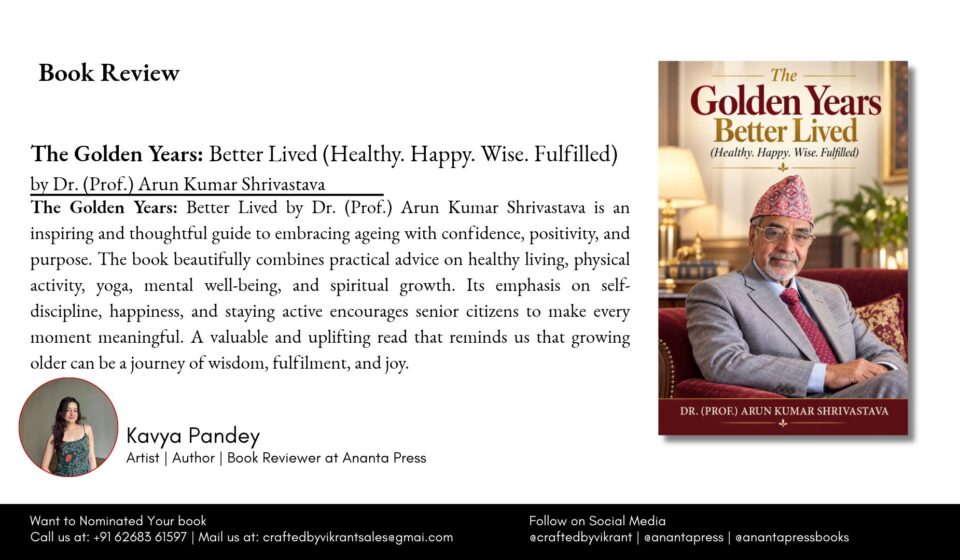
The Golden Years: Better Lived (Healthy. Happy. Wise. Fulfilled)

by Dr. (Prof.) Arun Kumar Shrivastava
Redefining Ageing as a Journey of Purpose, Wisdom, and Fulfilment
Ageing is often portrayed as a period of physical decline, increasing dependence, loneliness, and diminishing opportunities. Yet growing older can also bring emotional maturity, intellectual clarity, meaningful relationships, spiritual awareness, and a deeper appreciation of life. In The Golden Years: Better Lived (Healthy. Happy. Wise. Fulfilled), Dr. (Prof.) Arun Kumar Shrivastava challenges the assumption that later life must be defined primarily by limitations. Instead, he presents ageing as a meaningful stage that can be enriched through conscious choices, disciplined habits, positive thinking, and continued participation in society.
This book is more than a conventional wellness guide for senior citizens. It is a wide-ranging exploration of physical health, mental resilience, emotional well-being, spiritual development, self-awareness, and personal responsibility. Drawing upon his experiences as a writer, sociologist, thinker, and senior citizen, Dr. Shrivastava communicates with the sincerity of someone addressing his own generation.
The author explains in his preface that this is his sixteenth book and that he completed it on 10 September 2026. At the age of 75, he describes continuing to dedicate several hours daily to reading, studying, and writing. This personal commitment gives the book an important dimension: its recommendations are closely connected to the lifestyle and convictions of its author.
The central message is clear: growing older should not mean giving up on growth, happiness, usefulness, or personal fulfilment.
A Comprehensive Perspective on Healthy Ageing
One of the book’s most notable qualities is its broad approach to ageing. Rather than concentrating exclusively on physical illness or medical treatments, Dr. Shrivastava examines how everyday habits, personal attitudes, relationships, and spiritual practices collectively influence the quality of later life.
The opening chapters introduce the importance of the body’s biological clock, also known as the circadian rhythm. The author discusses how regular sleeping patterns, consistent meal timings, morning activity, and disciplined daily routines can contribute to greater physical and mental stability.
His emphasis on routine is particularly relevant for people transitioning from demanding professional lives into retirement. Without established schedules, the sudden availability of free time can sometimes produce inactivity or a feeling of disconnection. The book encourages readers to replace such uncertainty with purposeful daily habits.
Importantly, the author does not promote activity merely for the sake of remaining occupied. He connects meaningful activity with self-confidence, motivation, independence, and a continuing sense of identity.
Throughout the book, health is presented as something requiring ongoing attention rather than concern only after illness develops.
Understanding the Physical Realities of Growing Older
The sections examining age-related physical changes provide an informative foundation for the book’s wider philosophy.
Dr. Shrivastava discusses changes affecting the skin, hair, eyesight, hearing, bones, digestive system, heart, and nervous system. He also addresses conditions commonly associated with later life, including arthritis, diabetes, cardiovascular disease, osteoporosis, sleep disturbances, and cognitive difficulties.
These discussions acknowledge that ageing involves genuine physical challenges. The author’s optimism does not entirely ignore the realities of declining strength, chronic illness, or the need for assistance.
One practical strength is his repeated encouragement to seek appropriate medical advice. He advises readers not to self-medicate, to consult qualified physicians when symptoms develop, and to maintain regular health examinations.
The book also contains a discussion of cardiac arrest, heart attacks, and CPR, highlighting the importance of recognising emergencies.
These topics broaden the book’s usefulness beyond inspirational writing. They encourage preventive awareness and reinforce the importance of responsible health decisions. However, its medical discussions should be read as general guidance rather than a substitute for professional diagnosis or individualised treatment.
The Transformative Role of Physical Activity
Physical activity forms one of the strongest recurring themes throughout The Golden Years: Better Lived.
Walking, stretching, yoga, cycling, and recreational activities are discussed as ways to remain physically engaged and mentally refreshed. The author consistently encourages senior citizens to avoid prolonged inactivity while recognising the importance of working within their personal capabilities.
His emphasis on walking is especially accessible. Walking requires relatively little equipment and can provide opportunities for social interaction, exposure to nature, and enjoyment of everyday surroundings.
For older adults who may feel intimidated by demanding fitness programmes, this focus on familiar activities offers a realistic starting point.
The book also discusses the importance of maintaining muscular strength, protecting bones, and reducing the risk of falls and accidents.
Underlying these recommendations is a broader philosophy expressed through the Sanskrit principle Charaiveti, Charaiveti—keep moving, keep moving.
In the context of the book, movement represents more than physical exercise. It becomes a symbol of continued curiosity, self-improvement, resilience, and enthusiasm for life.
Ashtanga Yoga and the Connection Between Body and Mind
A distinctive feature of Dr. Shrivastava’s work is the integration of traditional Indian spiritual thought with contemporary discussions of healthy living.
The author devotes considerable attention to Ashtanga Yoga and its eightfold framework. He explains principles such as Ahimsa, Satya, Asteya, Brahmacharya, and Aparigraha, alongside the personal disciplines associated with Niyama.
His discussion extends beyond physical postures to include Pranayama, Pratyahara, Dharana, Dhyana, and Samadhi.
This approach positions yoga as a complete philosophy of living rather than merely a form of exercise.
For Dr. Shrivastava, disciplined conduct, moderation, self-reflection, emotional balance, and spiritual awareness are interconnected. He encourages readers to develop inner stability by cultivating habits that support both personal well-being and responsible social behaviour.
These passages will particularly appeal to readers interested in Indian philosophy and the relationship between spirituality and everyday life.
Some of the author’s claims about spiritual energy, longevity, consciousness, and the effects of particular practices are grounded in his personal beliefs and traditional philosophical framework rather than demonstrated clinical evidence. Nevertheless, the broader emphasis on mindfulness, purposeful activity, self-awareness, and ethical living gives these chapters considerable reflective value.
Mental Well-Being, Emotional Strength, and the Challenges of Loneliness
Beyond physical fitness, the book examines the emotional challenges that can accompany growing older.
Retirement, reduced social interaction, changes in family relationships, and the loss of familiar responsibilities can leave some older individuals feeling isolated or undervalued. Dr. Shrivastava acknowledges these concerns and encourages readers to remain socially involved, emotionally independent, and mentally active.
His discussion of stress, anxiety, worry, and depression emphasises the importance of positive thinking, supportive relationships, self-confidence, and meaningful engagement.
He also encourages older adults to develop interests that provide personal satisfaction rather than depending entirely on family members for happiness.
This is an important dimension of the book because it recognises that emotional fulfilment requires more than physical comfort or financial security.
The chapters addressing loneliness and self-belief reinforce the idea that senior citizens should continue regarding themselves as capable individuals whose experiences and contributions remain valuable.
The Importance of Relationships, Community, and Social Participation
Another appealing aspect of The Golden Years: Better Lived is its attention to companionship and community.
The author emphasises maintaining friendships, participating in cultural activities, enjoying family relationships, and contributing to society through service and knowledge-sharing.
He encourages readers to discover hobbies, remain intellectually curious, and participate in activities that create opportunities for interaction.
His broader message is that meaningful ageing involves remaining connected to the world rather than withdrawing from it.
The book also suggests that senior citizens can serve as sources of guidance and inspiration for younger generations.
Such a perspective challenges the notion that retirement represents the end of an individual’s productive contribution. Instead, retirement can provide opportunities to share experience, pursue neglected interests, and build relationships around common values.
This philosophy adds warmth to the book and makes its message relevant not only to older readers but also to families seeking to better understand the emotional needs of ageing relatives.
Practical Wisdom for Everyday Living
The book’s usefulness is strengthened by its attention to everyday decisions.
Among its numerous topics are balanced nutrition, seasonal fruits and vegetables, maintaining an appropriate body weight, avoiding excessive consumption of oil and ghee, developing healthy sleeping habits, protecting the body from falls, and remaining aware of changing health requirements.
Dr. Shrivastava also explores the potential disadvantages of excessive screen exposure and the importance of preserving mental alertness.
His recommendations concerning reading, writing, hobbies, social interaction, and continuous learning reflect a commitment to lifelong intellectual development.
One especially encouraging aspect is the author’s insistence that older adults continue exploring new experiences. Learning does not belong exclusively to childhood or professional life; it remains valuable throughout adulthood.
The book’s many practical suggestions can be considered individually, allowing readers to identify habits that suit their circumstances and abilities.
The Writing Style and Overall Reading Experience
Dr. Shrivastava writes in a direct, instructive, and frequently conversational manner. His tone resembles that of an experienced elder sharing observations with friends rather than an academic researcher presenting a strictly technical study.
His discussions combine personal conviction, philosophical reflection, practical advice, and explanations of health-related subjects.
The writing sometimes becomes repetitive, particularly when emphasising positivity, discipline, activity, and spiritual awareness. However, this repetition also reveals the principles the author considers essential.
The book’s broad coverage is both a strength and a limitation. Readers seeking an accessible combination of motivation, traditional philosophy, and practical lifestyle advice may appreciate its scope. Those looking for a tightly organised, clinically referenced health manual may find its mixture of spiritual beliefs and medical information less suitable.
A clearer distinction between personal convictions, traditional teachings, and scientifically established findings would have strengthened some discussions.
Nevertheless, the book possesses a distinctive voice, grounded in the author’s determination to remain intellectually productive and personally engaged during his own golden years.
Final Verdict: A Celebration of Life Beyond Retirement
The Golden Years: Better Lived succeeds most effectively as an encouraging reflection on how later life can remain purposeful, engaging, and emotionally rewarding.
Its greatest strength lies in its refusal to treat ageing as an automatic withdrawal from meaningful living. Dr. Shrivastava reminds readers that age need not diminish curiosity, compassion, self-respect, spiritual exploration, or the desire to contribute to others.
The book’s combination of wellness guidance, personal experience, Ashtanga Yoga philosophy, emotional reflection, and practical living advice creates a multidimensional reading experience.
It is particularly suitable for senior citizens interested in improving their daily routines, adults preparing for retirement, caregivers, and family members wishing to understand the importance of dignity and independence in later life.
Ultimately, the book communicates a deeply worthwhile idea: the value of life should not be measured only by the number of years lived, but also by the awareness, relationships, learning, kindness, and purpose brought into those years.
Dr. (Prof.) Arun Kumar Shrivastava’s The Golden Years: Better Lived is an uplifting reminder that growing older is inevitable, but continuing to grow as a person remains a lifelong possibility.


