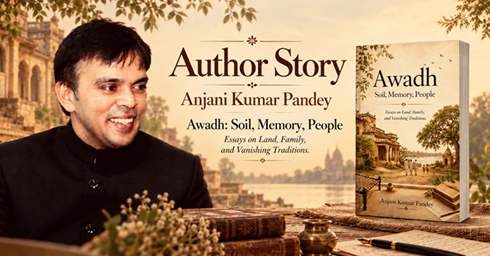

Through his book Awadh: Soil, Memory, People, the author reflects on village life, family connections, cultural heritage, and the memories that continue to shape our identity.
There was a time when village mornings began with familiar sounds, neighbours knew each other by name, and festivals brought entire communities together. Life moved at a different pace, and even the smallest traditions carried meaning. Today, many of those experiences survive mainly through memories and stories passed from one generation to another.
It is this changing relationship between people and their cultural roots that Anjani Kumar Pandey explores in his book, Awadh: Soil, Memory, People.
The book is a collection of essays about land, family, and vanishing traditions. Rather than focusing on major historical events, it draws attention to everyday experiences that quietly shape a community’s identity.
At the centre of the narrative is Awadh, a region remembered through its customs, landscapes, spiritual beliefs, and family relationships. The author approaches these subjects with an emotional connection, showing how ordinary places can hold extraordinary significance.
A temple courtyard, for example, is not simply a place for worship. It is where generations gather, prayers become shared memories, and traditions continue through familiar gestures. Similarly, an old banyan tree represents more than nature. It becomes a witness to the lives and beliefs of the people who have grown around it.
The author’s description of the village deity is particularly meaningful. The divine presence is imagined beyond the boundaries of a shrine, existing in community rituals, the sacred waters of the Ganga, and the everyday expressions of faith.
Another beautiful element is the connection between nature and human life. The arrival of spring, the changing fields, and women singing traditional songs to welcome the rains reflect the close relationship between rural communities and their surroundings.
These descriptions encourage readers to think about how much of their own childhood remains connected to places that may no longer look the same.
Anjani Kumar Pandey’s personal journey adds another dimension to his writing. Born in Pratapgarh and raised in Prayagraj, he received his education from Allahabad University, NALSAR Hyderabad, and IIM Lucknow. He joined the Indian Revenue Service in 2010 and later transitioned into the corporate sector.
Alongside his professional responsibilities, he has maintained a strong interest in literature, creative expression, and environmental awareness. His earlier literary work includes Allahabad Blues.
What makes Awadh: Soil, Memory, People relevant is its attention to something easily overlooked: the quiet disappearance of cultural practices.
As younger generations move towards cities and different lifestyles, many traditions risk becoming distant memories. The book encourages readers to value these inherited experiences rather than regard them as unimportant parts of the past. It also offers a gentle reminder that remembering one’s roots does not necessarily mean resisting change. Instead, it means understanding the people and experiences that helped shape us. Through its focus on family, faith, nature, and ancestral connections, Awadh: Soil, Memory, People presents a heartfelt exploration of cultural belonging. Ultimately, it is a book about remembering what time cannot completely erase: the emotional bond between a person, a community, and the land they once called home.