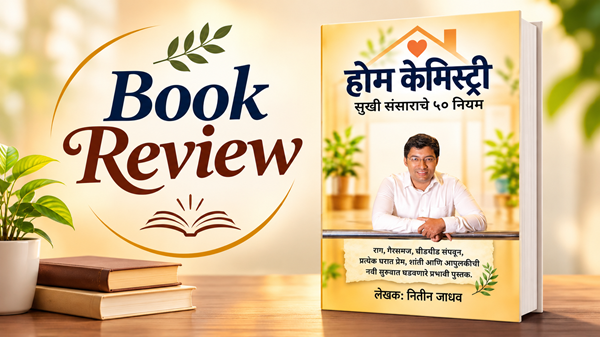
Home Chemistry – Sukhi Sansareche Pannas Niyam by Nitin Satish Jadhav: A Thoughtful Guide to Love, Understanding, and a Happy Married Life

Book Review
Marriage is one of the most meaningful relationships in human life, yet it is also one of the most complex. It brings together two individuals who may have different personalities, expectations, emotional needs, habits, and perspectives. While love often forms the foundation of a marriage, sustaining a happy relationship requires much more than affection alone. Understanding, communication, patience, trust, and mutual respect play equally important roles in creating a fulfilling partnership. In Home Chemistry – Sukhi Sansareche Pannas Niyam (50 Rules for a Happy Married Life), author Nitin Satish Jadhav explores these essential aspects of marriage through a practical and relatable approach.
The book offers a thoughtful perspective on the everyday realities of married life. Rather than presenting marriage as a relationship that remains harmonious simply because two people love each other, it recognizes that happiness must be consciously created through consistent effort, emotional awareness, and cooperation.
Through fifty practical principles, the author aims to help couples understand the importance of small actions, meaningful communication, and shared responsibility in maintaining a healthy relationship.
One of the most significant ideas presented in Home Chemistry is that marriage involves much more than two people living under the same roof.
It represents the coming together of two distinct personalities, each carrying individual experiences, beliefs, emotional expectations, and personal habits.
Even when two individuals share deep affection, differences in thinking and behavior are natural. The challenge is not to eliminate those differences but to learn how to respect and accommodate them.
The book encourages readers to recognize that a successful marriage does not require both partners to think or behave identically.
Instead, it depends on their willingness to understand one another and create a shared emotional foundation.
This perspective is particularly relevant in contemporary relationships, where personal independence and shared responsibilities must often be balanced carefully. Love is frequently celebrated as the most important ingredient of marriage. However, affection alone cannot resolve every disagreement or misunderstanding.
The book highlights the importance of emotional understanding as a foundation for long-term happiness.
Two people may genuinely love each other and still experience frustration because they interpret situations differently.
One partner may expect verbal reassurance, while the other may express affection through practical actions. One may prefer discussing problems immediately, while the other may need time to process emotions.
Such differences can lead to misunderstandings when partners fail to recognize each other’s perspectives.
The central message of Home Chemistry encourages couples to move beyond assumptions and develop the habit of understanding one another’s emotional needs.
A harmonious relationship emerges when both individuals feel respected, valued, and heard. Communication is one of the most essential themes emphasized in the book. Many marital disagreements begin not because of major differences but because of everyday misunderstandings, unspoken expectations, or the inability to express emotions effectively. A simple conversation can sometimes prevent a minor issue from developing into a serious conflict. However, meaningful communication involves more than speaking.
It also requires listening patiently, considering the other person’s feelings, and responding without unnecessary judgment. The book’s practical orientation encourages readers to appreciate the value of honest and respectful conversations. Healthy communication can help couples discuss financial responsibilities, household expectations, family relationships, and personal concerns without turning every disagreement into an argument. Equally important is the ability to recognize when emotions are influencing communication.
Words spoken in anger can create unnecessary emotional distance. Taking time to understand the situation before responding can contribute to more constructive discussions.
The book’s emphasis on everyday behavior makes these ideas particularly relevant to married couples. Trust forms the emotional foundation of a stable marriage. Without trust, even ordinary situations may create doubt, insecurity, and unnecessary conflict. Home Chemistry recognizes that trust develops gradually through honesty, reliability, and consistent behavior. Small actions can influence a partner’s sense of security. Keeping promises, acknowledging concerns, and maintaining transparency can strengthen emotional confidence within a relationship. Mutual respect is equally important. Respect means recognizing that both partners have individual identities, opinions, ambitions, and emotional needs. It requires allowing space for differences without treating them as threats to the relationship. The book’s central philosophy suggests that lasting marital happiness becomes possible when love is supported by dignity and equality. A relationship in which one person consistently dominates decisions or dismisses the other’s feelings may struggle to maintain genuine harmony. Shared understanding and respect help create a partnership in which both individuals can grow.
Even deeply committed couples may experience frustration because of different expectations, responsibilities, or habits.
The book addresses anger and misunderstandings as important aspects of everyday married life.
Its positive and practical approach encourages readers to recognize that conflict itself does not necessarily indicate an unsuccessful marriage.
What matters is how partners respond to conflict. Arguments can become destructive when individuals focus on proving themselves right rather than understanding the underlying issue. A more constructive approach involves patience, self-awareness, and the willingness to acknowledge mistakes. Apologizing when necessary and avoiding unnecessarily hurtful language can help maintain emotional closeness. The book’s emphasis on small behavioral changes offers a useful reminder that marital harmony often depends on everyday choices rather than extraordinary gestures.
Modern life introduces numerous demands on personal relationships. Professional responsibilities, household duties, social commitments, and digital distractions can gradually reduce the time couples spend meaningfully connecting. Home Chemistry recognizes the importance of giving time and attention to one’s partner. Living together does not automatically guarantee emotional closeness. Two people may share the same home yet become emotionally distant when conversations are limited to responsibilities and daily schedules. Quality time creates opportunities for appreciation, reassurance, and genuine companionship.
Simple activities such as sharing meals, discussing daily experiences, taking walks, or spending uninterrupted time together can help strengthen emotional bonds.
The book encourages couples to recognize that affection must be expressed through attention as well as words. Financial matters are another significant area addressed by the book. Money can influence household decisions, personal expectations, future planning, and family responsibilities. Differences in spending habits or financial priorities may create tension when couples do not communicate openly.A healthy approach to financial matters involves shared understanding, realistic expectations, and responsible decision-making. Couples may have different opinions about saving, spending, supporting relatives, or planning for future goals.
The book’s focus on practical marital challenges reinforces the importance of discussing these issues respectfully. Financial cooperation does not require both partners to earn equally or contribute in identical ways.Rather, it requires fairness, transparency, and recognition of each person’s circumstances and responsibilities.
Marriage frequently involves relationships extending beyond the couple. Parents, relatives, children, and other family members may influence household responsibilities and personal decisions. Maintaining harmony within these relationships requires patience, boundaries, and mutual understanding. The book acknowledges the importance of family relationships while also recognizing the changing challenges of modern married life. Contemporary couples may need to balance traditional expectations with professional ambitions, personal independence, and changing social roles. These circumstances can create new questions about responsibilities, decision-making, and emotional priorities.The book’s practical perspective encourages partners to approach such challenges as a team.
Respecting family relationships while maintaining mutual understanding within marriage can contribute to a healthier domestic environment. One of the most appealing aspects of Home Chemistry – Sukhi Sansareche Pannas Niyam is its presentation of fifty rules as practical guiding principles rather than rigid instructions.
The book’s description makes it clear that these principles are intended as small lessons drawn from experience, thought, and everyday behavior.
This distinction matters because every marriage is different.
What works for one couple may require adjustment in another relationship.
A successful partnership cannot be reduced to a single formula.
However, thoughtful principles can encourage individuals to reflect on their behavior and identify opportunities for improvement.
The book’s emphasis on simplicity and practical understanding makes its message accessible to readers from different backgrounds. Home Chemistry addresses concerns that are especially meaningful in contemporary married life.
Changing work patterns, rising expectations, increased responsibilities, and evolving family structures can place pressure on relationships.
Couples need emotional maturity and adaptability to navigate these circumstances.
The book is particularly relevant to newly married couples who are learning to understand each other’s habits and expectations.
It may also appeal to experienced couples who wish to strengthen communication and rediscover emotional closeness.
Individuals preparing for marriage can benefit from reflecting on its broader message that successful relationships require cooperation and consistent effort. Home Chemistry – Sukhi Sansareche Pannas Niyam by Nitin Satish Jadhav presents a meaningful exploration of the values that contribute to a happy and fulfilling married life. Through its emphasis on love, understanding, communication, trust, respect, financial awareness, and everyday cooperation, the book encourages couples to view marriage as a partnership that develops through conscious effort.
Its central strength lies in recognizing that marital happiness is not the result of perfection. Every relationship encounters disagreements, misunderstandings, and changing circumstances. What makes a partnership meaningful is the willingness of both individuals to continue learning, listening, and supporting each other. The fifty principles offer a framework for thinking about the small but important habits that influence long-term relationship satisfaction. For married couples, newlyweds, and readers interested in strengthening personal relationships, Home Chemistry offers an accessible and encouraging perspective.
Ultimately, the book delivers a simple yet powerful message: a happy marriage does not happen automatically. It is created every day through mutual understanding, thoughtful actions, and the shared commitment of two people who choose to grow together.
Amazon Link – https://www.amazon.in/Sukhi-Sansareche-Pannas-SATISH-JADHAV/dp/9379001010/