60 Ke Baad Zindagi Shuru Hoti Hai by Sushil Kumar Srivastava

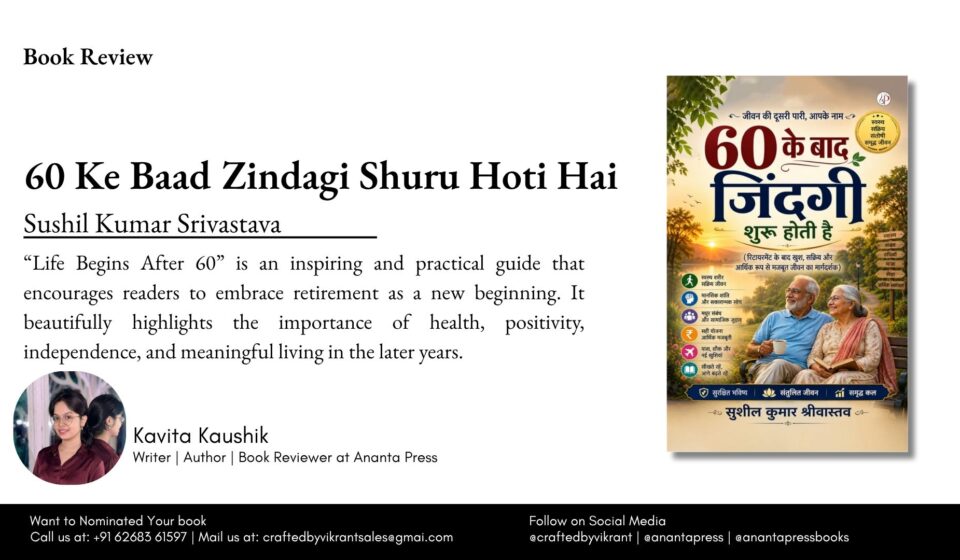
“Life Begins After 60” by Sushil Kumar Srivastava is an inspiring and thoughtful book that presents retirement and later life not as an ending, but as the beginning of a new and meaningful chapter. With a positive and practical approach, the book encourages senior citizens to look beyond the limitations often associated with age and discover new opportunities for happiness, independence, learning, and personal growth.
The central message of the book is simple yet powerful: turning sixty does not mean that life has come to an end. Instead, it can be the beginning of a “second innings” filled with new experiences, freedom, confidence, and possibilities. The author explains that after retirement, many people may feel lonely, inactive, or restricted. However, this stage of life can also provide valuable time to pursue interests, fulfill unfinished dreams, strengthen relationships, and focus on personal well-being.
One of the strongest aspects of this book is its emphasis on positive thinking. The author repeatedly reminds readers that age should not become a mental barrier. A negative mindset can increase stress, anxiety, and loneliness, while positive thinking can help maintain confidence and mental peace. The book encourages readers to develop good habits, spend time with positive people, practice meditation, and maintain an attitude of gratitude. It presents positivity not simply as an optimistic idea, but as an important part of living a peaceful and satisfying life.
Health is another major focus of the book. The author recognizes that physical health becomes increasingly important after sixty. Rather than suggesting that older people should simply rest and withdraw from activities, the book encourages them to remain physically active according to their abilities. Walking, yoga, and pranayama are presented as useful ways to support both physical and mental well-being. The message is practical: maintaining a healthy routine can contribute greatly to confidence, energy, and quality of life.
The discussion of mental peace and loneliness is particularly relevant. Retirement can sometimes create a sudden change in daily routine. A person who has spent decades working may suddenly have more free time and fewer responsibilities. Without a new routine or purpose, this freedom can sometimes lead to feelings of isolation. The book encourages readers to use this period constructively instead of allowing loneliness to dominate their lives. Developing hobbies, maintaining relationships, learning new skills, travelling, writing, practising yoga, or becoming involved in social activities can help keep the mind active and engaged.
The book also gives importance to family relationships and changing generations. As people grow older, relationships with children and younger family members may change. Differences in opinions, lifestyles, technology, and expectations can sometimes create misunderstandings. The book encourages senior citizens to approach such changes with patience and understanding. Rather than withdrawing from the younger generation, readers are encouraged to remain connected, communicate openly, and adapt to changing circumstances.
Another valuable theme is social engagement. The author believes that an active social life can add meaning and happiness to the later years. Retirement should not mean isolation from society. Senior citizens can remain involved through community activities, social service, friendships, cultural activities, and other constructive work. Staying connected can provide emotional support while also allowing older people to share their knowledge and experience with others.
A particularly motivating part of the book is its message that dreams do not have an expiry date. Many people postpone their interests and ambitions because of work, family responsibilities, or other commitments. After retirement, they may finally have the time to explore these interests. The book encourages readers to rediscover activities they once enjoyed or to begin something completely new. Writing, music, yoga, travel, social service, small businesses, learning a language, and learning to use computers or social media are among the possibilities discussed.
The author’s discussion of technology and social media is also useful in today’s world. Older generations may sometimes feel uncomfortable with new technology, but learning to use digital tools can help them remain connected with family, friends, and the wider world. Technology can also open doors to new forms of learning and communication. The book encourages readers not to fear new technology but to approach it with curiosity and a willingness to learn.
Travel is presented as another way to make life more enjoyable and meaningful. Retirement can offer more freedom to visit places that were difficult to explore during working years. Travel can provide new experiences, relaxation, learning, and opportunities to connect with different cultures and people. The underlying message is that life should continue to be experienced actively rather than being limited by assumptions about age.
The idea of self-reliance and financial security is equally important. A happy retirement is not only about physical health and entertainment; financial confidence can also contribute to peace of mind. The book recognizes the importance of planning and maintaining financial independence wherever possible. It encourages readers to think about their needs and make responsible choices so that they can live their later years with greater confidence and dignity.
What makes “Life Begins After 60” accessible is its simple and practical approach. The author does not present retirement as a complicated subject. Instead, the book focuses on everyday choices and attitudes that can make a meaningful difference. Its suggestions are directed toward real-life situations faced by senior citizens, making the book useful not only for those who have already retired but also for people approaching retirement.
The book also challenges the common belief that sixty is an age when a person should stop trying new things. The author argues that age is not simply a number that determines what someone can or cannot do. Experience can actually become a strength. A person over sixty has decades of knowledge, lessons, relationships, and experiences that can be used to create a richer and more purposeful life.
Another important message is the value of making every day meaningful. Happiness does not always come from major achievements or material success. It can be found in small moments—peace of mind, family relationships, friendship, gratitude, learning, meaningful activities, and the ability to enjoy the present. The book encourages readers to appreciate these everyday experiences instead of constantly looking backward at what has already passed.
The author’s overall philosophy can be summed up as an invitation to accept the later years with confidence rather than fear. Retirement can bring changes, but change can also create opportunities. The end of professional life can provide the beginning of personal exploration. The reduction of workplace responsibilities can create time for family, hobbies, travel, learning, and social contribution. The book encourages readers to see these possibilities rather than focusing only on the challenges of ageing.
The book is also valuable for families of senior citizens. Understanding the emotional and practical needs of older people can help younger family members provide better support. Senior citizens need respect, independence, companionship, and opportunities to remain active. The book indirectly encourages families to see ageing not as a burden but as a stage of life that deserves dignity, understanding, and participation.
One of the most positive qualities of “Life Begins After 60” is its hopeful tone. It does not treat ageing as something that should be feared. Instead, it presents the later years as a period in which people can use their experience and freedom to create a new identity and direction. The author’s intention is clearly to become a supportive guide for senior citizens and to inspire hope, enthusiasm, and new energy in their lives.
Ultimately, “Life Begins After 60” is more than a book about retirement. It is a reminder that life continues to offer possibilities at every age. Its message is especially meaningful for people who may feel that their most productive or exciting years are behind them. Through its discussions of health, mental peace, positive thinking, family, social engagement, technology, travel, learning, independence, and dreams, the book encourages readers to actively shape their second innings.
The book leaves readers with an uplifting thought: life does not stop after sixty; only its form changes. With the right attitude, every new day can bring an opportunity to learn, connect, experience, and grow. The author encourages senior citizens to welcome this stage with gratitude, confidence, and enthusiasm rather than seeing it as a period of limitation.
In conclusion, “Life Begins After 60” is an encouraging and practical guide for anyone who wants to make the later years happier, healthier, more active, and more meaningful. It celebrates experience, independence, relationships, learning, and the courage to begin again. The book’s strongest message is that retirement is not the end of life’s journey—it can be the beginning of a beautiful second innings.